How Much Self Storage Space Do I Need? A Practical UK Size Guide
What size storage unit do I need? A quick answer
As a rough UK guide, the contents of one room fit in a 25–50 sq. ft unit, a one to two-bedroom flat in 50–75 sq. ft, a typical three-bedroom house in 100–150 sq. ft, and a larger four to five-bedroom home in 150–250 sq. ft. The exact size depends on how much furniture you have, how well you pack, and whether you need walking space to reach items. If you are between two sizes, it is usually cheaper to pack a slightly smaller unit well than to pay for space you will not use.
Choosing a storage unit size is the single biggest factor in what you pay, so it is worth getting right. This guide gives you room-by-room and life-event estimates, explains what changes the figure, and shows you how to avoid renting more space than you need. SCA Self Storage offers units from 15 to 500 sq. ft across Doncaster, Pontefract, Ripon, Rotherham, Sheffield and Sunderland, so most household and business needs fit somewhere in that range.
What affects the amount of storage space you need?
Two people clearing the same house can need very different units. The main factors are:
Volume of large furniture – sofas, beds, wardrobes and appliances take up the most room and are hard to compress.
How well you pack – uniform boxes that stack to the ceiling can roughly halve the floor space you need compared with loose, mismatched items.
Whether you need access – if you will visit regularly to take things in and out, leave a walkway, which adds 10–20% to the size.
How long you are storing – long-term storage can be packed tighter; short-term ‘working’ storage needs more room to move.
Fragile or awkward items – mirrors, glass, bikes and garden equipment often cannot be stacked and need extra allowance.
Storage unit sizes explained (with everyday examples)
A 15–25 sq. ft unit suits a few boxes, a student’s belongings or seasonal items. A 50 sq. ft unit holds roughly one room or a small flat. A 100 sq. ft unit holds the contents of a two to three-bedroom house. A 150–250 sq. ft unit suits a larger family home, and 300–500 sq. ft suits business stock or a full house move with garden and garage items.
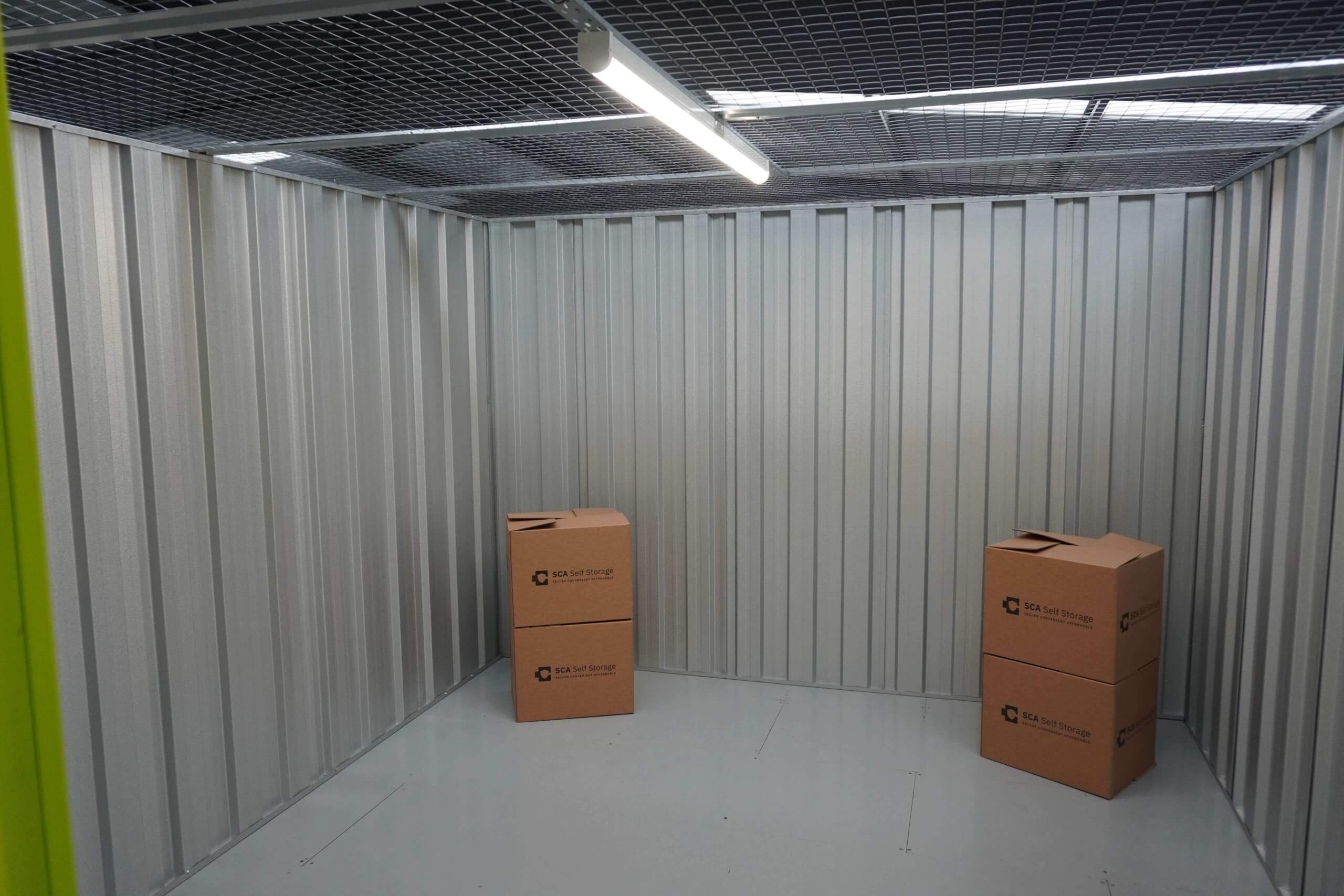
15 to 25 sq. ft (about the size of a large cupboard or small shed)
Good for documents, a few items of furniture, suitcases, seasonal decorations or a student’s room over the summer.
50 sq. ft (about the size of a small single garage section)
Holds the contents of a one to two-bedroom flat – a bed, sofa, white goods, a dining set and around 20–30 boxes if packed neatly.
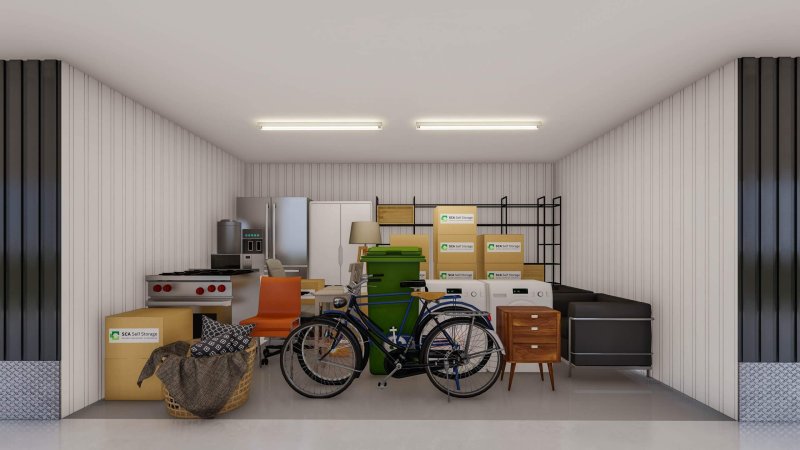
100 to 150 sq. ft (about the size of a single garage)
Holds a typical three-bedroom house, including larger furniture, appliances and boxes. This is one of the most common sizes for a family house move.
200 to 500 sq. ft (garage-plus)
Suits four to five-bedroom homes, business stock, trade equipment or a full move where garden, loft and garage contents all need storing at once.
How much storage space do I need by life event?
Moving house
For a house move, size your unit to the number of bedrooms you are clearing: roughly 50 sq. ft for a flat, 100 sq. ft for a three-bedroom house and 150 sq. ft or more for a larger home. Add a little extra if you are moving garden, loft or garage items at the same time.
Decluttering
If you are creating space at home rather than emptying it, a 25–50 sq. ft unit usually covers furniture, boxes and items you are not ready to part with. Drive-up units make it easy to drop off as you sort room by room.
Renovating
When you are clearing one or two rooms so trades can work, a 50–75 sq. ft unit protects furniture and flooring from dust and damage. Clean, dry indoor units are ideal here.
Student storage
Between terms, most students fit their belongings into a 15–25 sq. ft unit – books, clothes, a small fridge and bedding. Splitting one slightly larger unit between housemates can cut the cost.
Business stock
Stock levels vary, but online sellers often start in a 50–100 sq. ft unit and scale up as orders grow. Flexible contracts mean you can change unit size without committing to a commercial lease.
How to avoid paying for too much space
Measure your largest items first – the biggest piece of furniture often dictates the minimum size.
Use uniform boxes and fill them fully so they stack safely and squarely.
Dismantle beds, tables and flat-pack furniture to reclaim floor space.
Store upwards – a tall unit packed to the ceiling holds far more than a wide unit packed knee-high.
Be honest about access – only pay for a walkway if you will actually use one.
How to pack a unit properly
Put heavy, sturdy items (white goods, drawers, sealed boxes) on the floor as your base.
Stack lighter and more fragile boxes on top, heaviest at the bottom of each stack.
Stand sofas and mattresses on their ends against the walls to save floor space.
Keep anything you may need sooner near the door, with a clear line of sight.
Leave small gaps for airflow and cover upholstered items with breathable sheets, not plastic.
When to ask for help choosing a unit
If you are unsure, it is always worth a quick call. The team can talk through your inventory and suggest a size, and because SCA contracts are flexible you can move up or down a size if your first choice is not quite right. The minimum rental is 28 days with a 14-day notice period, so you are never locked into the wrong size for long.
Start by listing the main items you need to store.
Think about large furniture first, then add boxes, appliances, tools, stock or seasonal items. This gives you a clearer idea of whether you need a small unit for boxes or a larger unit for full room contents.
Is it better to choose a bigger storage unit?
Not always.
A slightly larger unit can make access easier, especially if you need to collect items regularly. A smaller unit may work well if you are storing everything once and do not need to move around inside the space.
How much storage space do I need for a few boxes?
A small unit or locker-style space may be enough for boxes, documents, clothes, small appliances or seasonal items.
This can suit students, people clearing spare rooms, or businesses storing files and small amounts of stock.
How much storage space do I need for furniture?
It depends on how much furniture you have and whether larger items can be dismantled.
Beds, wardrobes, tables and shelving take up less space when taken apart. Sofas, mattresses and appliances need more careful planning because they are harder to stack.
How much space do I need when moving house?
For a house move, base your choice on the number of rooms you are storing.
A few boxes and smaller items may only need a compact unit. Furniture and contents from several rooms will need more space, especially if you need room to access items during the move.
Can I change unit size later?
Yes. If your needs change, you can speak to the SCA team about moving to a more suitable unit size.
This is useful if you add more items, remove furniture, downsize after a move or need extra space for business stock.
How can I make better use of my storage space?
Use strong boxes, stack safely and dismantle furniture where possible.
Keep heavier boxes at the bottom, lighter items on top and leave a small walkway if you need regular access. Shelving can also help if you are storing business stock or documents.
Should I leave space to walk around inside the unit?
Yes, if you need regular access.
A walkway makes it easier to reach boxes, stock or furniture without unpacking the whole unit. If you only need to store items short term and collect everything at once, you may be able to pack the unit more tightly.
What if I choose the wrong unit size?
Speak to the team as soon as possible.
If another unit size is available, they can advise on a better option. It is common for storage needs to change once you start packing, especially during house moves or business stock changes.
Can SCA help me choose the right storage size?
Yes. The SCA Self Storage team can help you estimate the space you need based on what you plan to store.
They can talk through your items, explain suitable unit options and help you avoid choosing a space that is too small or unnecessarily large.
Make your move easier
To get started, visit our locations page and choose the SCA Self Storage site that works best for you. From there, you can view the available location options and make an enquiry with the team directly.